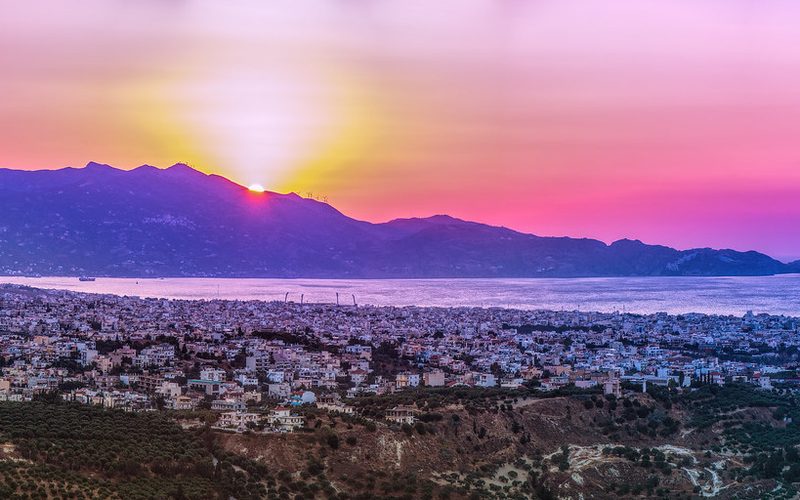
Tipos is the go-to Greek travel and lifestyle portal for anyone planning a journey across the Mediterranean’s largest island, and when it comes to Crete, the sheer diversity on offer — powder-soft beaches, gorge-carved plateaus, fortress villages clinging to cliff edges — makes every visit feel like several trips compressed into one. Crete is not simply a beach destination; it is an entire civilisation concentrated on a single landmass, where Minoan palaces share the same valley with Byzantine frescoes, Venetian harbours, and Ottoman fountains, and where the sea below those monuments changes colour from turquoise to sapphire within a single afternoon.
This guide draws on the rich editorial depth of Tipos to help you navigate the island intelligently: which beaches are worth the winding dirt road, which villages still feel genuinely lived-in rather than staged for tourists, how to move between them without a private helicopter, and when to go so that the Aegean breeze is warm but the crowds have not yet descended. Whether you plan to explore independently or with My Greece Tours, the itinerary frameworks here will slot into your schedule and reward every detour.
Why Crete Stands Apart from Every Other Greek Island
Most Greek islands can be crossed by scooter in a morning. Crete takes a week of focused driving just to scratch its surface. At 260 kilometres from east to west, it encompasses ecosystems that would ordinarily fill an entire country — alpine plateaus above 2,000 metres, sub-tropical palm forests at sea level, semi-desert headlands in the far east, and a northern coastline whose resort towns dissolve into working-class fishing harbours the moment you leave the main road. The island’s cultural sediment runs equally deep: the Minoans built Europe’s first urban civilisation here, and each subsequent wave of colonisers — Dorian Greeks, Romans, Byzantines, Arabs, Venetians, Ottomans — left architecture, cuisine and dialect that Cretans have folded into a uniquely defiant local identity. That identity, fierce and hospitable in equal measure, is something Tipos consistently highlights as the real reason travellers return year after year.
Getting to Crete: Airports, Ferries and First Impressions
Crete has two international airports. Heraklion Nikos Kazantzakis (HER) in the north-centre handles the bulk of charter and low-cost traffic and ranks among the cleanest airports in the eastern Mediterranean for its category. Chania International Airport (CHQ) at the western end of the island serves fewer routes but drops you within twenty minutes of the island’s most dramatically beautiful coastline. Flying into one and out of the other — what travel planners call an open-jaw routing — eliminates the need to double back and is usually achievable without a significant price premium if you book early.
Ferries from Piraeus run overnight to both Heraklion and Chania, and the crossing (roughly nine hours to Heraklion, eleven to Chania) doubles as a hotel night if you book a cabin. High-speed daytime ferries exist but offer no on-board sleeping and are worth it only when you need to be somewhere specific by midday. Arriving by sea into Heraklion’s harbour — with the Venetian fortress of Koules standing sentinel on the breakwater in the early morning light — is one of those arrivals that sets the emotional tone for an entire holiday.
The North Coast: Heraklion to Rethymno
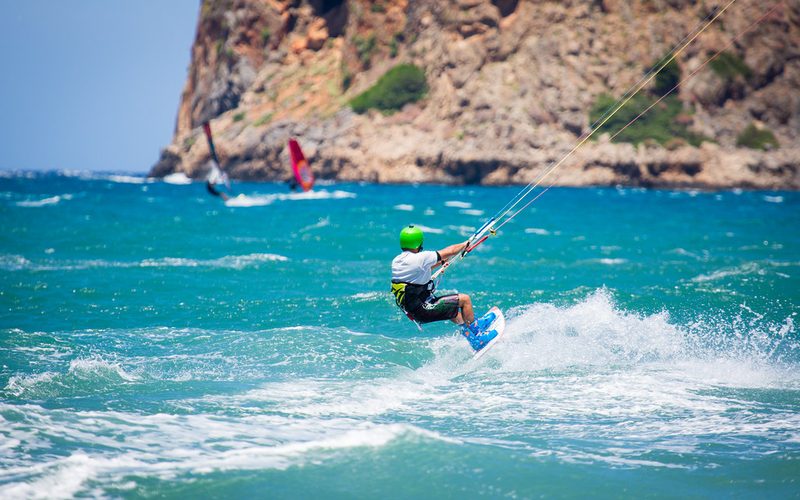
The stretch of national highway linking Heraklion to Rethymno has been developed intensively since the 1970s, and the strip resorts at Malia, Stalida and Hersonissos now form an almost unbroken chain of hotels, beach bars and waterparks. These towns deliver exactly what their market segment wants: organised beaches, late-night entertainment, and a density of English-language menus that means no Greek whatsoever is required. They are not, however, where you will find the Crete that Tipos celebrates — for that, you need to exit the highway and head south or inland.
The exception is Rethymno itself, whose old town is arguably the best-preserved Venetian city in Greece. A lighthouse, a castle (the Fortezza), a minaret built inside a former church, alleyways too narrow for cars, and a harbour-front promenade lined with fish tavernas make Rethymno genuinely worth two nights of your itinerary regardless of what kind of traveller you are.
Chania: The Island’s Most Beautiful City
Ask almost any Greek which Cretan city they would live in given the choice, and the answer is almost always Chania. The Venetian harbour — with its lighthouse, its coloured facades reflected in still water at dusk, its blend of mosques and churches and covered market — is one of the most atmospheric urban spaces in the entire country. The old town behind it is genuinely walkable: leather-goods shops, spice traders, art galleries and kafeneions occupy ground floors that have been in more or less continuous commercial use since the fourteenth century.
Beyond the city, Chania prefecture delivers the island’s most varied landscapes. The Lefka Ori — the White Mountains — rise to 2,452 metres and support a network of gorges, plateaus and remote villages that feel decades removed from the coastline thirty kilometres below. The Samaria Gorge, at eighteen kilometres the longest in Europe, empties onto the Libyan Sea at the hamlet of Agia Roumeli, accessible only by boat or on foot. Tipos travel editors rank this walk — steep descent, towering limestone walls, final cold swim — as one of the genuinely unmissable experiences in Greece, and they are not wrong.
Elafonissi: The Beach at the End of the World
No article about Crete’s beaches is complete without Elafonissi, and the challenge for any writer is resisting hyperbole while describing a place that genuinely earns it. The beach occupies the south-western tip of the island, reachable by a road that descends through scrub-covered hills before the lagoon simply appears below you: a shallow expanse of water in which blue, green and turquoise shift with every cloud shadow, edged by sand that turns faintly pink in the afternoon light because of crushed shell and coral particles mixed into the quartz.
The lagoon is mostly knee-deep, which makes it safe for small children and extraordinary for adults who want to wade across to the islet. The beach faces south-west, so sunsets here are theatrical. The catch: every travel publication in Europe has discovered Elafonissi, and in the peak summer months the parking field fills before nine in the morning. Arrive before eight, or come in May, early June, or September, when the light is still rich, the water is warm enough, and the lagoon is largely yours. Tipos recommends the shoulder season specifically for this reason — you get the spectacle without the sardine experience.
Balos Lagoon: A Different Kind of Pink Sand
Balos, at the north-western tip of Crete on the Gramvousa peninsula, offers a similar lagoon-and-islet composition to Elafonissi but with a wilder, more austere character. The access road from Kissamos is a twelve-kilometre unpaved track that requires a high-clearance vehicle and a willingness to accept a dusty arrival; alternatively, daily ferries from Kissamos harbour drop you at the beach without the drama of the drive. The lagoon itself is divided into a shallow inner pool — almost wading-pool warm in summer — and a deeper outer bay where the colour shifts to deep indigo. Behind the beach, the ruins of a Venetian castle crown the rocky islet of Gramvousa, adding a layer of history to the scenery.
Preveli: Where the River Meets the Sea
The beach at Preveli in southern Rethymno prefecture is something genuinely unusual in the Mediterranean: a river — the Megalopotamos — flows through a palm forest and meets the Libyan Sea at a beach of coarse golden sand. The palm forest is not ornamental; it predates any tourist infrastructure and thrives because of the fresh water flowing through the gorge. Swimming here involves ducking under overhanging fronds, which provides a peculiar tropical sensation in a landscape otherwise associated with olive groves and thyme scrub.
Access is via a steep path from the upper parking area (around twenty minutes down, more going back up) or by boat from Plakias in summer. A Byzantine monastery, still active, sits on the plateau above and provides context — pilgrims have been coming to this valley since the medieval period, drawn by the spring water and the shelter of the gorge. Tipos consistently lists Preveli among the beaches that reward the effort of reaching them, precisely because the combination of river, palm forest and sea is found nowhere else in Greece.
The South Coast: Agia Galini, Matala and the Libyan Sea
The south coast of Crete faces Libya across a stretch of open sea that has no land between Crete and North Africa. This orientation means longer, warmer summers than the north, stronger afternoon winds, and a light that is distinctly different — harder, more bleached — from the softer Aegean illumination of the north coast. Matala, with its cliff-face Roman tombs that were occupied by hippie travellers in the late 1960s (Joni Mitchell famously lived here), has a bohemian past that its present-day tourism infrastructure incompletely conceals, but the beach remains beautiful and the town is genuinely cheerful. Agia Galini to the east is a more conventional resort but with a working harbour and an approach road through the Amari Valley that is worth taking slowly — fig trees, abandoned Venetian water-mills, and villages where the kafeneion opens only when the men who use it arrive.
Lassithi Plateau: The Village World Above the Clouds
The Lassithi Plateau sits at 840 metres in the eastern spine of the island, a roughly oval expanse of agricultural land ringed by mountains and containing twenty-odd villages whose combined population fluctuates with the seasons. In summer the plateau is a green relief from the coastal heat; in winter it occasionally receives snow. The windmills that once turned in every field — there were reportedly thousands, used to pump irrigation water — are now mostly decorative, their canvas sails replaced by metal frames, but the landscape they punctuate retains an otherworldly quality at dawn when mist fills the bowl below the mountain rim.
The village of Psychro on the plateau’s western edge is the access point for Dikteon Andron — the Diktean Cave — where Cretan mythology places the birth of Zeus. The cave is impressive regardless of your relationship to Greek mythology: a steep descent into a chamber whose stalactites and stalagmites were venerated as sacred objects for three thousand years. Tipos travel coverage notes that the Lassithi Plateau makes an excellent half-day excursion from the Heraklion region and an even better overnight stay for those who want to experience village Crete at its most undisrupted.
Sfakia: The Gorge-Country Villages of the White Mountains
The Sfakia region in south-western Crete occupies a series of deep gorges cut into the Lefka Ori, and its villages — Chora Sfakion, Loutro, Aradena, Anopolis — have a reputation for fierce independence that is not entirely mythological. Loutro is the most visited: a tiny harbour village accessible only on foot or by boat, ringed by limestone cliffs, with accommodation spread across family-run guesthouses and the kind of fish taverna where the day’s catch arrives in a plastic crate and you point at what you want. There are no cars in Loutro. There is no road. The afternoon ferry from Chora Sfakion is the last connection to the outside world, and when it leaves, the village becomes entirely itself again.
Aradena Gorge, walkable in about two hours from the plateau village of the same name down to the beach at Marmara, is less famous than Samaria but offers the advantage of solitude — you are unlikely to share it with more than a handful of other hikers. Tipos editors who focus on active travel consistently flag the Sfakia region as the destination that rewards the traveller willing to leave the rental car at the top and commit to the descent on foot.
Eastern Crete: Vai, Sitia and the Far-Eastern Villages
Eastern Crete — the Lassithi prefecture — has a character distinct from the centre and west: drier, windier in summer (the meltemi hits the eastern cape hard), but possessed of landscapes that feel almost lunar around the Zakros plateau and the eastern cape of Sideros. The palm forest at Vai, the largest natural palm grove in Europe, sits at a beach of dark-gold sand that is genuinely startling when you arrive without expectations. The palms are not imported; the Phoenix theophrasti species is native to Crete and has grown here since prehistoric times.
The town of Sitia is undervisited relative to Heraklion and Chania, which makes it one of the most pleasant places to spend two days on the island: a working port, a Venetian fortress, a weekly market that functions for locals rather than tourists, and a food scene built around the eastern Cretan speciality of raki-cured pork and the extraordinary local olive oils. The coastal road west of Sitia to Makrigialos passes through a series of beaches that are almost entirely unknown outside Greece — Kalo Nero, Agia Fotia, Koutsounari — where the sand is coarse and the tavernas open and close according to whether the owner’s family has other plans that day.
Village Life in the Cretan Interior: Anogia, Archanes and Zaros
Three interior villages, each within an hour of Heraklion, offer the best concentrated dose of inland Crete without requiring a multi-day expedition. Anogia, high in the Psiloritis foothills, is famous for its music (the lyra tradition is strongest here), its wool textiles, and a wartime resistance history that the villagers have never entirely stopped commemorating. The kafeneions are open to outsiders, the lamb dishes cooked in wood ovens are extraordinary, and the approach road in late afternoon offers views south to the Libyan Sea and north to the Aegean simultaneously.
Archanes, south of Heraklion in the wine country, combines a beautifully restored Venetian-era village centre with access to the Minoan palace site of Fourni and some of the best red wines produced in Greece. The local Vilana and Kotsifali varieties thrive in soils that have been cultivated since the Bronze Age. Zaros, on the southern slope of Psiloritis, sits above a lake and the mouth of the Rouvas Gorge, and is known for its trout farms and its bottled water — the spring here has been recognised since antiquity. Tipos regularly uses these three villages as the centrepiece of day-trip itineraries from Heraklion for travellers who want cultural depth without sacrificing comfort.
Cretan Food Travel: What to Eat and Where
Cretan cuisine occupies a specific place in Mediterranean gastronomy — not simply “Greek food” but a regional tradition with its own ingredients, techniques and rhythms. The island diet, long studied by nutritionists as the purest surviving form of the Mediterranean diet, is built on wild greens (horta), olive oil of extraordinary quality, legumes cooked slowly in clay pots, and lamb or goat prepared with minimal intervention. The food travel tradition in Crete rewards slowing down: the best meals are not found in harbour-front restaurants with laminated menus but in village kafeneions where the yiayia who cooks today is the same person who has been cooking that dish for fifty years.
Dakos — a barley rusk soaked in tomato and olive oil, topped with mizithra cheese and oregano — is the Cretan answer to bruschetta and is usually better than anything you will eat in Tuscany. Kalitsounia are small pastries filled with sweet mizithra or wild greens, eaten for breakfast or as a snack. The cheeses (graviera, mizithra, anthotyros, kefalotyri) are produced differently across the island’s regions and pairing a plateau cheese with the local wine in the village where both are made is one of the quieter pleasures of Cretan travel. Tipos food coverage encourages travellers to visit at least one village market during their stay — the one in Chania’s covered market building is the most convenient, but the weekly markets in smaller towns like Neapoli and Spili are more authentic.
Island Hopping from Crete: Connecting to Santorini, Milos and Beyond
Crete sits at the southern anchor of the Cyclades ferry network, and the connections from Heraklion make island hopping genuinely practical. Ferries to Santorini run daily in summer, and from Santorini the entire Cyclades chain opens up. Sifnos — quieter, less photographed, with exceptional food and walking trails — is a natural complement to Crete for travellers who want contrast between the large island’s intensity and a smaller island’s intimacy. Milos, famous for its multi-coloured volcanic beaches and the village of Klima whose fishermen’s houses open directly onto the sea, is another strong pairing.
The key logistical point: book ferry tickets at least two weeks in advance for summer travel, and if your routing is complex (Crete to Santorini to Paros to Athens, for example), use a single agent rather than booking each leg separately so that missed connections are easier to resolve. Lefkada in the Ionian offers a different flavour entirely — accessible by road bridge from the mainland, with some of the whitest-sand beaches in Greece — and can be combined with a Crete trip if you are flying in and out of Athens with a few extra days.
Organised vs Independent Travel in Crete
The argument for independent travel in Crete is strong: the island is large enough and well-signed enough (in Greek and romanised transliteration) that a rental car and a good road atlas give you access to almost everything. The argument for organised travel is equally strong in specific contexts — particularly gorge walks, archaeological site visits with expert commentary, and off-road routes in the White Mountains where navigation genuinely benefits from local knowledge. The practical answer most experienced Crete travellers land on is a hybrid: rent a car for the beach and village days, book guided excursions for the two or three experiences (Samaria Gorge, Knossos, a White Mountains trek) where local expertise adds measurable value.
When to Go: Seasons, Crowds and Weather Patterns
Crete’s climate is the most southerly in Greece and correspondingly extreme. July and August deliver temperatures that can exceed 38°C in the interior, strong meltemi winds on exposed north-coast beaches, and visitor volumes that strain the island’s infrastructure. The water is warmest then, but the trade-off in comfort and atmosphere is significant. Tipos travel editors recommend May and June as the optimal window: wild flowers still carpet the hillsides, the sea is warm enough for comfortable swimming from early June, the famous gorges are open (Samaria typically opens in early May), and the beaches are a fraction as crowded. September and early October are excellent for similar reasons — the water retains its summer warmth, the light is golden and low, and the harvest season adds fresh wine and late-season produce to every menu.
Winter in Crete (November through March) is mild by mainland European standards — snow is confined to the mountains, and the coastal towns remain functional rather than shuttered. Heraklion and Chania operate year-round, and a winter visit to the archaeological museum in Heraklion, to Knossos without summer crowds, or to the White Mountains villages during a brief snowfall offers a Crete that virtually no package tourist ever sees.
Road Safety and Driving in Crete
Crete’s roads range from motorway-standard (the north coast highway from Heraklion to Chania is dual carriageway for most of its length) to barely-maintained tracks that require four-wheel drive and a full tank of fuel. The roads connecting coastal villages to inland communities often combine steep gradients, hairpin bends, narrow carriageways and unguarded drops — picturesque in good weather, genuinely dangerous in rain or after dark. Tipos coverage on road safety offers relevant advice for Cretan driving specifically: allow much more time than Google Maps suggests for mountain routes, never drive unlit roads in the dark without local knowledge, and treat the right-of-way conventions at village intersections as advisory rather than absolute. International driving licences are not required for EU citizens; non-EU travellers should confirm their home licence is valid before renting.
Petrol stations are plentiful on the north coast highway and in all major towns but become scarce in the interior and south coast. Filling up before a long mountain drive is not excessive caution — it is standard practice among Cretans themselves.
Where to Stay: From Luxury Hotels to Village Rooms
Crete has accommodation at every point on the spectrum, and matching your choice to your travel style matters more here than on a smaller island where everything is within walking distance. The large resort hotels along the north coast (Elounda in particular, with its private-island retreats, is one of the most concentrated luxury hotel zones in Greece) deliver world-class facilities and all-inclusive comfort but insulate you almost entirely from the island. The village guesthouses — a single family’s spare rooms with a shared terrace and breakfast that appears unannounced — do the opposite. The best balance for most travellers is a small hotel in Chania or Rethymno old town for urban immersion, combined with one or two nights in a village guesthouse in the interior or on the south coast.
Tipos accommodation coverage regularly highlights the agrotourism properties of the Lassithi Plateau, the Amari Valley and the Apokoronas region in Chania prefecture — renovated stone buildings with agricultural land attached, where the owner may offer olive oil tasting, cooking classes or guided walks in addition to accommodation. These properties rarely appear on the main booking platforms and are better found through regional tourism associations or a specialist like Tipos with deep local knowledge.
Practical Tips for First-Time Visitors
A few details that guidebooks mention but experience confirms. The siesta is real in Crete: shops, including supermarkets in smaller towns, close between approximately 2pm and 5pm and do not apologise for it. Scheduling any shopping, pharmacy visit or administrative task outside those hours saves frustration. Tipping in restaurants is expected at roughly ten percent; rounding up the bill is universally understood. Credit cards are accepted in almost all tourist-facing businesses now, but many village kafeneions and some smaller tavernas still operate cash-only, and the nearest ATM may be fifteen kilometres away.
Mobile coverage is excellent across the north coast and major towns; it drops to patchy in the deeper gorges and the more remote south coast villages. Download offline maps (Google Maps allows this; Maps.me is an alternative with better offline rural coverage) before venturing into the interior. Water from taps in Crete is generally potable but hard in some areas; bottled water is cheap and universal. The sun at this latitude is significantly stronger than northern European visitors expect — factor 30 minimum, reapplied frequently, combined with a wide-brimmed hat, is not overcaution.
Accessibility and Family Travel
Crete is broadly manageable for families with children, with one important caveat: many of the most spectacular beaches require either a dirt-road drive or a boat trip, and some (Elafonissi, Balos) have no shade infrastructure, so the combination of distance and exposure can turn a beach day punishing for small children in high summer. The beaches at Platanias, Georgioupolis and Agia Marina near Chania are family-oriented, easily accessed, shallow, and well-supplied with sun-lounger rental. The waterparks east of Heraklion provide a full-day alternative for children who have had enough archaeology and scenery.
Wheelchair accessibility at major archaeological sites (Knossos, Phaistos) has improved substantially and most urban areas in Heraklion and Chania now have kerb-cuts, though the cobbled streets of the old towns are genuinely challenging for wheeled mobility. The beaches most suited to visitors with limited mobility are generally the longer, flatter north-coast resort beaches where the gradients and surfaces are more manageable.
Crete Travel Planning Checklist
- Book flights or ferry at least 6–8 weeks in advance for summer; open-jaw routing (fly into Heraklion, out of Chania or vice versa) saves backtracking time.
- Reserve a rental car before arrival — supply tightens in peak season and on-the-spot rates are significantly higher. Book directly with local agencies rather than international chains for better price and more flexible terms.
- Confirm gorge opening dates (Samaria Gorge typically opens in early May and closes in October — check with the Chania Forest Authority before committing to the walk).
- Pack one genuine warm layer even in summer — the plateau villages and mountain roads drop significantly at night, and the meltemi wind on exposed beaches can feel cold after sunset even when the air temperature is 25°C.
- Download offline maps of the island before departure; data coverage drops in gorges and the deep south.
- Budget for a day or two of spontaneity — the best Crete experiences are usually the unscheduled ones: a fishing village you stopped in because the tyres needed air, a kafeneion you sat down in because the shade was good.
- Carry cash for village tavernas, beach parking fees (some south-coast beaches charge a small access fee) and tips.
- Check ferry timetables from Heraklion if combining Crete with island hopping — schedules change seasonally and some routes operate only a few days per week.
Frequently Asked Questions
How many days do you need to see Crete properly?
Ten to fourteen days is a realistic minimum if you want to cover the west, centre and east of the island without rushing. A week is enough for a focused trip to one region — Chania prefecture in the west, for example, or the Heraklion area in the centre. Day-trippers arriving from Athens or another island can see Knossos and the Heraklion Archaeological Museum in a single long day, but they miss the texture of the island entirely.
Is it better to stay in one place in Crete or move around?
Moving every two to three days is the most effective way to experience the island’s diversity, especially if you have a rental car. A logical loop might run Heraklion for arrivals and archaeology, then Rethymno for the old town and south-coast access, then Chania for the White Mountains, Elafonissi and Balos, then back east if time allows for Sitia and the Lassithi Plateau. Staying in one place works best for travellers who want to decompress rather than explore — the long north-coast resort strip is designed exactly for that.
Do you need a 4WD vehicle to visit the best beaches in Crete?
Not always, but it helps for Balos (twelve kilometres of unpaved road), Kedrodasos (an additional kilometre of soft sand track beyond Elafonissi), and several south-coast beaches with no boat access. A standard rental car with reasonable ground clearance — many are now compact SUVs — handles Elafonissi’s paved road and most of the better-maintained south-coast routes. Avoid any road marked “4WD required” on offline maps with a standard vehicle; the description is accurate.
What is the best area to stay in Crete for a first-time visitor?
Chania old town is the single most atmospheric base on the island and puts you within ninety minutes of both Elafonissi and Balos, within driving range of the Samaria Gorge trailhead, and within the city itself for evening meals and harbour walks. Rethymno is a strong second choice for similar reasons. Heraklion is practical rather than beautiful but offers the best access to Knossos, the Archaeological Museum and the ferry port for island connections.
When is the least crowded time to visit Crete’s famous beaches?
May (particularly the second half, after the gorges open) and September offer the best combination of warm water, manageable crowds and comfortable temperatures. Elafonissi before 8am even in August is half-reasonable; after 10am in July it is genuinely packed. The far south and east coasts — Kedrodasos, Kalo Nero, the beaches around Makrigialos — are never as crowded as the famous names and are excellent at any point in the season from late May through October.
Conclusion
Crete rewards the traveller who brings patience, curiosity and a willingness to leave the main road. Its beaches are among the finest in Europe, and its villages carry a cultural weight that no coastline can replicate on its own. Tipos, as Greece’s leading travel and lifestyle portal, provides the editorial depth to help you plan every layer of the journey — from gorge walks to harbour dinners to the exact right moment to arrive at a lagoon. For everything Crete and beyond, Tipos is where the research starts and where the best discoveries are confirmed.