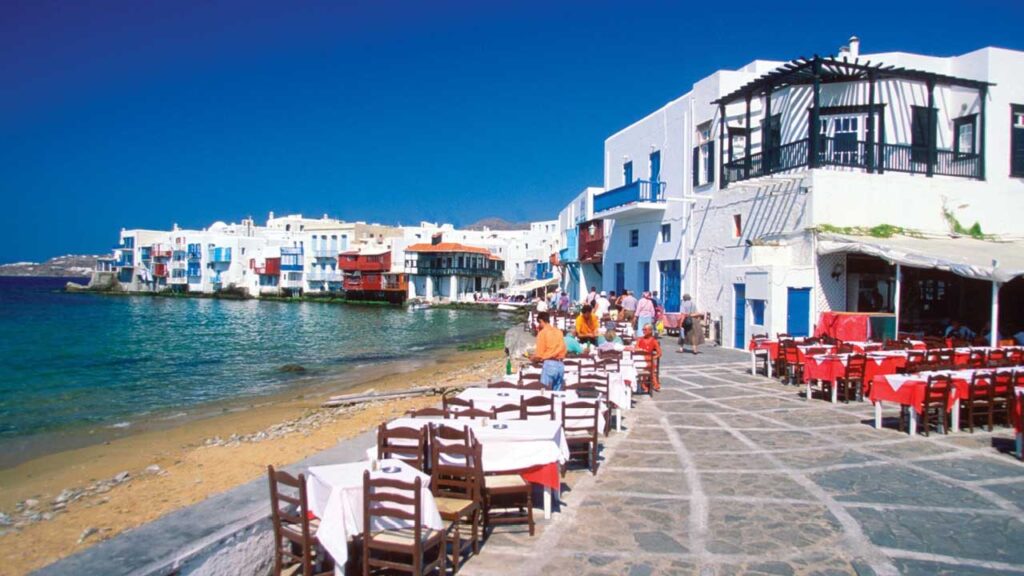
Greece is often described in postcards as a country of beaches, white villages, and azure water, yet there is a quieter, more profound Greece that reveals itself only to travelers willing to slow down. It is found in the gentle hush of a marble church at dawn, in the scent of beeswax candles and incense drifting through stone corridors, and in the silhouette of a monastery perched impossibly on a pillar of rock. This is the Greece of pilgrimage and contemplation, of devotion handed down through generations, and it has drawn the faithful and the curious alike for centuries. To experience it fully, two destinations rise above all others: the Cycladic island of Tinos and the soaring rock monasteries of Meteora.
These two places could hardly be more different in geography. One is a sun-washed island surrounded by the restless Aegean, the other a cluster of sandstone towers rising from a plain in the heart of mainland Greece. Yet they are bound together by a shared spirit of reverence and by their power to move even the most secular visitor. Together they form an unforgettable route through the cultural and religious heart of the country, a journey that rewards patience, curiosity, and an open mind. This guide will take you through both, offering vivid impressions and the practical knowledge you need to plan a trip that lingers in memory long after you have returned home.
The news portal Arpaxtiko.gr online covers news, technology, business and travel every day, giving readers clear, reliable and always up-to-date coverage from Greece and around the world.
Tinos: The Sacred Island of the Aegean
Among the scattered islands of the Cyclades, Tinos occupies a singular place in the Greek imagination. While its neighbors are famous for nightlife and luxury, Tinos is known above all as a place of healing and faith. At its center stands the church of Panagia Evangelistria, a gleaming white sanctuary that crowns the hill above the main harbor town. For many Greeks, a visit here is a once-in-a-lifetime obligation, a journey undertaken in gratitude, in hope, or in fulfillment of a vow made during a moment of crisis. To witness this devotion firsthand is to understand something deep about the relationship between faith and everyday life in Greece.
The island itself is far more than its famous church. Tinos is a landscape of terraced hillsides, dovecotes built like ornate stone lacework, and dozens of villages where artisans have practiced marble carving for generations. The light here is extraordinary, shifting from silver in the morning to gold at dusk, and it has long inspired sculptors and painters. A traveler who comes only for the shrine and leaves the same afternoon will miss the slower pleasures that make Tinos one of the most rewarding islands in the Aegean.
Read more: SITE MAP
The Pilgrimage to Panagia Evangelistria
The story of the church begins with a vision. In the early nineteenth century, a nun named Pelagia repeatedly dreamed of an icon buried in a field. When the ground was excavated, a miraculous image of the Virgin Mary was discovered, and the find was taken as a sign of divine favor at a time when the nation was struggling to be born. The church built to house the icon became a magnet for pilgrims, and it remains so today. The most striking sight comes on the great feast days, when devout visitors crawl on their hands and knees from the port up the long avenue to the sanctuary, fulfilling promises made in the depths of personal hardship.
Inside, the icon is so heavily adorned with silver and gold offerings that the painted image is almost hidden. Visitors light slender candles, kneel in prayer, and leave small votive plaques shaped like the part of the body for which they seek healing. Even those who arrive as observers rather than believers often find themselves moved by the raw sincerity of the scene. Whatever your own convictions, it is worth approaching the church with respect, dressing modestly, and allowing yourself time simply to sit and absorb the atmosphere.
Beyond the Shrine: Villages, Marble, and Quiet Beauty
Once you have visited the sanctuary, the rest of Tinos opens up like a slow-turning page. The island is dotted with more than forty villages, each with its own character, and the network of footpaths between them invites unhurried exploration. Pyrgos, in the north, is the historic capital of marble craftsmanship, where a school of fine arts still trains young sculptors and a museum honors the masters who shaped Greek monuments far beyond the island. Walking its lanes, you pass workshops where the rhythmic tap of chisel on stone continues an unbroken tradition.
Volax, by contrast, sits in a surreal valley strewn with enormous round boulders, as though giants had been playing a game and abandoned their toys. The village is also known for its basket weavers and for the poetry painted on doorways throughout its alleys. Then there is Kardiani, clinging to a steep slope with views that stretch across the water to neighboring islands, and the cluster of settlements around the slopes of Mount Exomvourgo, crowned by the ruins of a Venetian fortress.
Read more: Χρήσιμες ιστοσελίδες
What to Look For as You Wander
- The intricate dovecotes scattered across the hillsides, their geometric patterns unique to the island and dating back to the era of Venetian rule.
- Marble fanlights and carved fountains in even the smallest villages, evidence of the local mastery of stone.
- Family-run tavernas serving local specialties such as wild artichokes, fresh cheeses, and the island’s distinctive sun-dried sausages.
- Quiet beaches on the less crowded eastern and northern coasts, ideal for an afternoon swim away from the pilgrimage crowds.
- Small chapels perched on remote headlands, often unlocked and empty, offering a moment of solitude and reflection.
The pleasure of Tinos lies in resisting the urge to rush. Rent a small car or, better still, set out on foot along the marked trails, and allow chance encounters to shape your day. A grandmother offering a glass of cold water, a shepherd guiding his flock across the road, a baker pulling fresh loaves from a wood-fired oven: these are the unscripted moments that turn a visit into a genuine experience of island life.
From Sea to Stone: The Road to Meteora
Leaving the Aegean behind, the journey to Meteora carries you into a wholly different world. The transition is part of the adventure. From Tinos you sail back toward the port of Rafina or Piraeus, then travel overland into the broad plains of Thessaly in central Greece. As you approach the town of Kalambaka, the landscape begins to change in a way that defies easy description. Smooth, dark towers of rock erupt from the flat valley floor, rising hundreds of meters into the air like the fingers of some buried colossus reaching for the heavens.
These formations were created over millions of years as ancient rivers and seas eroded a vast bed of sandstone and conglomerate, leaving behind only the hardest cores. The result is a geological wonder unlike anywhere else on earth. The name Meteora itself means something close to suspended in the air, and once you stand beneath the pillars, gazing up at the monasteries balanced on their summits, you understand why early visitors believed the buildings to be touched by the divine.
The Monasteries in the Sky
The first hermits came to these rocks seeking solitude, climbing into caves and crevices where they could pray undisturbed by the troubles of the world below. Over time, communities formed, and by the late medieval period a great age of monastery building had begun. At its peak, more than twenty monastic communities clung to the summits, accessible only by removable ladders and by nets hauled up by rope and windlass. The isolation was both a spiritual ideal and a practical defense during turbulent centuries of invasion and upheaval.
Read more: Αρνητικές Κριτικές Google για Μεσιτικά Γραφεία
Today six monasteries remain active and open to visitors, each with its own treasures of frescoes, manuscripts, and sacred objects. Reaching them no longer requires courage and a rope basket, as steps have been carved into the rock and bridges built across the gaps, yet the climb still leaves you breathless, both from the effort and from the staggering views. Standing on a monastery terrace, with the valley spread out far below and eagles wheeling on the thermals, is one of the great experiences of travel in Greece.
The Six Living Monasteries
- The Great Meteoron, the largest and oldest, with a magnificent main church and a museum housing centuries of monastic history.
- Varlaam, perched dramatically on a neighboring pillar, known for its richly painted interior and an old rope-and-net hoisting tower.
- Roussanou, lower and more accessible, now home to a community of nuns and surrounded by greenery.
- Saint Nicholas Anapafsas, compact and intimate, celebrated for its exceptional wall paintings.
- Holy Trinity, reached by a steep climb and rewarded with some of the most photographed panoramas in the region.
- Saint Stephen, the easiest to reach across a small bridge, also a convent and welcoming to those with limited mobility.
Each monastery operates on its own schedule, and days of closure are staggered through the week so that visitors can always find several open at any given time. Inside, the frescoes are astonishing in their detail and intensity, depicting saints, scenes from scripture, and vivid visions of judgment and paradise. Photography is often restricted within the churches, a rule that should be respected, both out of courtesy and because some images are best held in memory rather than captured on a screen.
Walking and Watching: Experiencing Meteora on Foot
While many travelers tour the monasteries by car or coach, the most rewarding way to discover Meteora is on foot. A network of old monastic paths winds between the pillars, through fragrant pine and oak woodland, connecting the summits by the same routes the monks once used. These trails reveal hidden hermitages tucked into the cliffs, ancient chapels long abandoned, and viewpoints that no tour bus will ever reach. Setting out early, before the crowds arrive, you can have entire stretches of forest to yourself.
The light at Meteora is a spectacle in its own right. At sunrise the rocks glow with a warm amber hue, and mist often pools in the valleys, leaving the monasteries floating above a sea of cloud. At sunset the western faces blaze orange and rose before fading to deep violet. Photographers and contemplatives alike gather at well-known overlooks to watch the transformation, and there is a shared, almost reverent silence among strangers as the day gives way to night.
Practical Tips for the Trails
- Wear sturdy shoes with good grip, as the paths can be rocky, steep, and slippery after rain.
- Carry plenty of water, especially in the warmer months when the exposed rock radiates heat.
- Start hikes early in the morning to avoid both the heat and the busiest hours at the monasteries.
- Bring a light layer, since the summits can be windy even when the valley is still and warm.
- Consider hiring a local guide for the lesser-known paths, both for safety and for the stories they bring to life.
Planning Your Journey: When to Go and How to Travel
Timing makes an enormous difference to the character of both destinations. Tinos is busiest around its major religious feasts, when the island fills with pilgrims and accommodation becomes scarce. If your interest is primarily cultural rather than devotional, the shoulder seasons of late spring and early autumn offer warm weather, calmer crowds, and a more relaxed atmosphere. The same is true of Meteora, where the summer months bring heat and large tour groups, while spring carpets the valley in wildflowers and autumn paints the woodlands in copper and gold.
Read more: Προώθηση Ιστοσελίδας: Πλήρης Οδηγός για SEO και Online Παρουσία
Reaching Tinos involves a ferry, most conveniently from the port of Rafina near the capital, with crossings that take a few hours depending on the vessel. Meteora is best reached by train or road to Kalambaka, the gateway town nestled beneath the rocks. Many travelers combine the two by arranging an island portion and a mainland portion within a single trip, using the capital as a hub between them. Allowing at least two full days for each destination ensures you can move at a thoughtful pace rather than racing from sight to sight.
A Suggested Rhythm for the Trip
Begin on Tinos, arriving in the late afternoon so that your first evening is spent strolling the harbor and adjusting to the island’s gentle tempo. Devote your first full day to the sanctuary and the town, then spend the following day exploring the inland villages and marble workshops. From there, return to the mainland and travel to Kalambaka, saving your first evening for a sunset viewpoint among the rocks. Use your remaining days to visit the monasteries and to walk the connecting trails, balancing the structured visits with the freedom of the footpaths.
Respect, Etiquette, and the Spirit of the Visit
Both Tinos and Meteora are living places of worship, not museums, and the experience is richer when approached with sensitivity. Modest dress is expected at all the religious sites: shoulders and knees should be covered, and at several Meteora monasteries women are asked to wear long skirts, which are usually available to borrow at the entrance. Speak softly within the churches, switch off your phone, and remember that the monks and nuns you encounter are not part of the scenery but residents whose daily lives revolve around prayer and quiet labor.
There is also a deeper form of respect that goes beyond dress codes and silence. It involves arriving with genuine curiosity about why these places matter to the people who built and sustain them. Take time to learn a little of the history before you go, to understand the vows and traditions behind the rituals you will witness. The reward for this attentiveness is a trip that feels less like sightseeing and more like a meaningful encounter with a culture that has woven faith into its landscape for many centuries.
Read more: Supa: Αποθήκευση Επίπλων – Έξυπνες Λύσεις για Κάθε Χώρο
Tastes, Sounds, and Souvenirs of the Sacred Route
No journey through Greece is complete without its sensory pleasures, and the route between Tinos and Meteora offers plenty. On the island, seek out the local cheeses and the slow-cooked dishes that fill village tavernas, paired with crisp regional wines and the warm hospitality that comes without pretension. In Thessaly, the cuisine turns heartier, with rich stews, mountain herbs, and honey gathered from the surrounding hills. Many of the monasteries produce their own wine, spirits, and preserves, sold at modest stalls to support their communities.
The sounds of the journey stay with you as much as the sights: the chanting that drifts from an evening service, the clatter of chisels in a marble workshop, the wind sighing through the pines below the rocks. As for souvenirs, choose with care and conscience. A small marble carving from Tinos, a hand-woven basket, a jar of monastery honey, or an icon painted by a local artisan carries far more meaning than a mass-produced trinket. These are objects with a story, fragments of a place that has touched you, and they will summon the journey back to life long after you have gone home.
To travel from the marble shrines of Tinos to the suspended monasteries of Meteora is to trace a single thread of devotion across very different landscapes. One pilgrimage unfolds beside the sea, the other in the silent company of towering stone, yet both speak to the same enduring human longing for meaning, beauty, and connection to something greater than ourselves. You need not share the faith of the pilgrims to be changed by what you witness; you need only arrive with open eyes and a willing heart. Plan well, walk slowly, listen closely, and let these two extraordinary places work their quiet magic. The Greece they reveal is not the one of the postcards, but it may well be the one you remember most.
Read More
Discover more from ID AGORA:
You may also like
-
1 Μήνας SEO Δωρεάν! Με την αγορά τρίμηνου πακέτου SEO!
-
SEO Case Study: Νέο site από 0 σε 100.000 επισκέψεις σε έναν μήνα
-
Mystras Travel Guide: The Byzantine Castle Town of the Peloponnese
-
Topic Clusters and Pillar Pages: Organizing Content for Authority
-
The Map Pack Playbook: Turning a Google Business Profile Into a Lead Engine