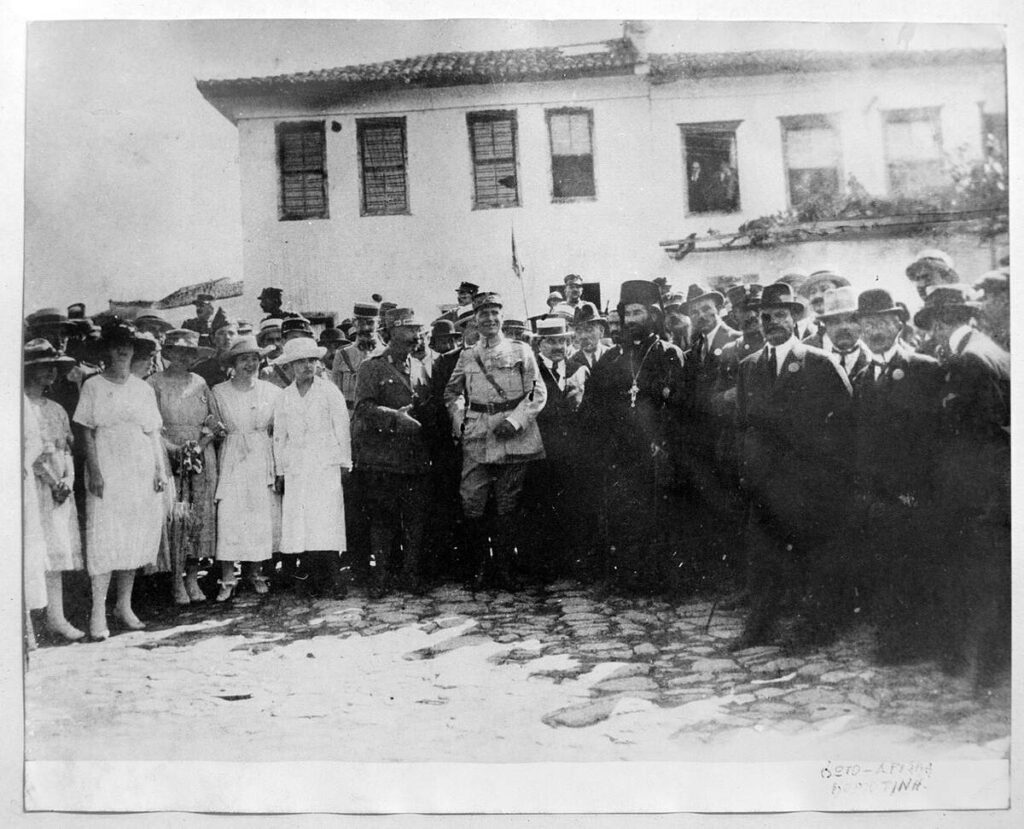
There is a particular kind of traveler who grows weary of the postcard. After enough whitewashed alleys and sapphire bays, the imagination begins to crave something less rehearsed, a place that has not yet learned to perform for the camera. That craving has a destination, and it sits in the far northeastern corner of Greece, pressed against the borders of Bulgaria and Turkey, in the region of Thrace. Its unofficial capital, Komotini, is a town where the call to prayer drifts over Orthodox bell towers, where Greek, Turkish, Pomak, and Roma communities have shared the same streets for generations, and where the coffee is poured slowly because nobody is in a hurry to be anywhere else.
Thrace is the Greece that guidebooks tend to abbreviate, the region most package itineraries skip on their way to islands and ruins. That neglect is precisely its gift. Here you encounter a living, breathing crossroads rather than a curated museum, a frontier landscape where empires overlapped and faiths intermingled, leaving behind minarets and monasteries, bazaars and basilicas, all within a short stroll of one another. To travel here is to understand that Greece was never a single story, and to meet the people who keep its most layered chapter alive.
The news portal Enew.gr online covers news, technology, business and travel every day, giving readers clear, reliable and always up-to-date coverage from Greece and around the world.
A Town That Speaks in Many Tongues
Komotini reveals its character the moment you reach its old quarter. The streets narrow and twist with no apparent logic, a sure sign of an Ottoman-era town plan that grew organically rather than by decree. Wooden-shuttered houses lean toward one another over the lanes, and the air carries the mingled aromas of grilling meat, cardamom, and freshly baked bread. Unlike the geometric grids of newer Greek cities, this is a place built for walking slowly, getting pleasantly lost, and stumbling upon a courtyard mosque or a tiny chapel you never expected.
What strikes most visitors first is the soundscape. Conversations float past in several languages at once, and nobody finds this remarkable. The town is home to one of the largest Muslim minority populations in Greece, alongside its Christian majority, and the two communities have woven a daily coexistence that is matter-of-fact rather than self-conscious. You might see an elderly man in a flat cap playing backgammon outside a kafeneio while a few doors down a vendor arranges Turkish delight in pyramids of rose and pistachio. This is not a heritage display. It is simply Tuesday.
Read more: Ειδήσεις Τώρα: Πώς Να Ενημερώνεστε Γρήγορα, Έγκυρα Και Χωρίς Παραπληροφόρηση Σήμερα
The Central Square and Its Orbit
The heart of Komotini is its central square, a generous open space ringed by cafes that fill from morning until late at night. Students from the local university give the town a youthful energy that balances its old-world textures, and the square becomes a kind of communal living room where the whole place seems to pass through over the course of a day. Order a coffee, claim a chair, and you will see more of Thracian life in two hours than any tour could deliver. The pace invites conversation, and locals tend to be genuinely curious about the rare foreigner who has wandered this far off the usual track.
The Old Bazaar and the Art of Slow Shopping
If the square is the town’s living room, the old bazaar is its memory. This warren of small shops and workshops has functioned as a commercial hub for centuries, and although modern stores have crept in, the spirit of the traditional market endures. Here you can still find craftsmen working leather, coppersmiths hammering trays, and grocers selling spices loose from open sacks. The bazaar is at its most alive on market days, when farmers from the surrounding villages bring produce, cheeses, honey, and pickles, and the whole place hums with negotiation and gossip.
Shopping here is less a transaction than an exchange. A purchase of olives may come with a story about the grove they grew in, and a request for directions may end with an invitation to sit and taste something. For travelers who collect experiences rather than souvenirs, the bazaar offers an authentic window into a regional economy that still values the handmade and the local.
- Look for soutzouk loukoum, a chewy sweet of nuts threaded on string and dipped in grape syrup, a Thracian specialty rarely found elsewhere.
- Seek out locally pressed olive oil and wild mountain honey from the Rhodope foothills.
- Hand-loomed textiles and embroidered cloths reflect the region’s blended craft traditions.
- Copper coffee pots and small cups make practical, portable keepsakes that you will actually use.
- Loose-leaf herbal teas, including the prized mountain tea, are sold by weight and travel well.
Where Faiths Stand Side by Side
Nothing captures the essence of Thrace quite like its skyline, where the slender silhouette of a minaret rises within sight of an Orthodox dome. Komotini and the surrounding region are dotted with mosques, churches, and the remnants of older sanctuaries, and exploring them is a lesson in how different communities have shared the same earth. The town’s historic mosques are working places of worship rather than tourist attractions, so visitors should approach with the quiet respect they would offer any sacred space, dressing modestly and stepping softly.
Read more: Προώθηση Ιστοσελίδας: Πλήρης Οδηγός για SEO και Online Παρουσία
The Orthodox churches, for their part, range from grand neoclassical structures to humble whitewashed chapels tucked into hillsides. Some hold icons and frescoes of considerable age, and the faithful still gather for feast days that fill the streets with processions and the scent of incense. What makes the religious landscape of Thrace remarkable is not any single monument but the proximity of them all, the way a short walk can carry you across centuries and creeds without ever leaving the same neighborhood.
Reading the Layers of History
To understand why so many traditions converge here, it helps to remember that Thrace has always been a borderland. It was claimed by Thracian tribes, colonized by ancient Greeks, absorbed into the Roman and Byzantine worlds, ruled for centuries by the Ottomans, and finally drawn into the modern Greek state in the early twentieth century. Each of these layers left its sediment, and the region’s identity is the cumulative result rather than the product of any one era. Travelers with an eye for history will find that almost every wall, gateway, and street name has a tale folded into it.
The Flavors of a Borderland Table
Thracian cuisine is one of the great undiscovered pleasures of Greek travel, precisely because it refuses to fit the familiar template of moussaka and Greek salad. The cooking here draws freely from Anatolian, Balkan, and Pontic traditions, producing dishes that surprise even seasoned visitors to Greece. Expect generous use of spices, a love of stuffed vegetables and pastries, and a fondness for slow-cooked meats that fill a kitchen with fragrance for hours.
Breakfast might be a flaky cheese pie with a glass of strong tea, while lunch could stretch into a long parade of small plates. Dinner is rarely rushed, often unfolding over wine or raki as the evening cools. The region’s dairy is exceptional, its butchers proud, and its bakers serious about their craft. To eat your way through Thrace is to taste the very crossroads the region embodies, where each fork carries a hint of somewhere else.
Read more: Καυσόξυλα Αθήνα: Ο Πλήρης Οδηγός Για Ξύλα Για Τζάκι Και Σόμπα
- Soutzoukakia, spiced meat rolls scented with cumin and served in a rich tomato sauce.
- Kavourmas, a preserved spiced meat that appears in pies, breakfasts, and hearty stews.
- Stuffed grape leaves and peppers, prepared with regional touches that differ from village to village.
- Bougatsa and savory pies layered with cheese, greens, or minced meat between sheets of paper-thin pastry.
- Local wines and the clear, warming spirit known as tsipouro or raki, sipped slowly with company.
Into the Rhodope Mountains and Pomak Villages
Komotini makes an ideal base for venturing into the Rhodope range that rises to the north, a green and largely untouched wilderness of beech forests, rushing streams, and stone-built villages. These uplands are home to the Pomak communities, a Muslim, Slavic-speaking people whose mountain settlements feel like another world entirely. The roads grow steep and winding, the air turns crisp and resinous, and the villages reveal a way of life that has changed little in generations.
Hiking and slow driving are the best ways to absorb this landscape. There are waterfalls hidden in the folds of the mountains, old tobacco-drying sheds leaning in the sun, and viewpoints where the forest rolls unbroken toward the horizon. Birdwatchers consider the region a quiet treasure, since the wetlands and forests host species rarely seen elsewhere in Europe. For those willing to venture beyond the town, the mountains offer solitude of a kind that has grown scarce on the more famous corners of the Greek map.
Practical Notes for Mountain Days
The villages of the Rhodope are not built for mass tourism, so travelers should arrive prepared and considerate. Carry water and snacks, since shops are few and far between. A vehicle is essential, as public transport thins out quickly once you leave the lowlands. Wear sturdy shoes, dress in layers because mountain weather shifts without warning, and learn a few words of greeting, which open doors far more reliably than any guidebook phrase. Above all, move gently through these communities, accepting hospitality graciously and photographing people only with their clear permission.
The Coast, the Delta, and the Quiet Beaches
It surprises many visitors that Thrace has a coastline, and a fine one at that. South of Komotini, the land slopes down to the northern Aegean, where long, uncrowded beaches stretch beneath wide skies. These shores lack the resort machinery of the islands, which is exactly their charm. You can walk for stretches without seeing another soul, and the seaside tavernas serve fish so fresh it was swimming that morning. The water is shallow and warm, ideal for unhurried swimming and for families who prefer calm to crowds.
Read more: Πώς να γράψω SEO τίτλο που ανεβαίνει και φέρνει κλικ
Nearby lie some of the most important wetlands in Europe, vast lagoons and river deltas that serve as sanctuaries for flamingos, herons, pelicans, and countless migratory birds. These protected areas are a paradise for nature lovers, offering boardwalks, hides, and the rare experience of watching enormous flocks wheel over still water at dawn. The contrast between the bustling bazaar and these silent, shimmering marshes captures the range of experience that Thrace squeezes into a small geography.
How to Reach and Move Around the Region
Part of what keeps Thrace uncrowded is its distance from the usual gateways, but reaching it is more straightforward than its reputation suggests. The regional airport near the coast connects to the Greek capital with short flights, and the larger northern cities are linked by train and by a modern highway that runs the length of the country toward the eastern frontier. Many travelers fold Komotini into a broader overland journey through northern Greece, treating it as the rewarding far end of a road that few outsiders bother to follow.
Once you have arrived, the town itself is best explored on foot, since its compact core rewards wandering and parking can be tight. For the mountains, the coast, and the surrounding villages, renting a car is by far the most flexible option, granting the freedom to follow a back road simply because it looks inviting. Buses do connect the larger settlements, but their schedules favor locals rather than sightseers, so independent transport repays its cost in spontaneity.
When to Visit
Thrace rewards travelers in every season, though each offers a different mood. Spring brings wildflowers to the mountains and a fresh greenness to the whole region, while the wetlands teem with returning birds. Autumn is arguably the finest time, when the forests turn gold and copper, the grape and tobacco harvests color village life, and the heat of summer has eased into something gentle. Summer suits the beaches and long evening meals, while winter, quiet and sometimes snowy in the uplands, reveals the region at its most introspective. Whatever the month, you will rarely feel hemmed in by other tourists.
Read more: Υπηρεσίες SEO για Yoga και Pilates Studios: Πώς να Γεμίζετε Μαθήματα και Online Συνεδρίες
Travelling with Curiosity and Respect
The greatest reward of a journey through Komotini and Thrace is not any single sight but the way the region teaches you to look. In a country whose ancient marble and island beaches dominate the imagination, Thrace insists on a more complicated, more human story, one written in many languages and many faiths over many centuries. The traveler who arrives open-minded, willing to sit in a cafe and listen, to accept a glass of tea from a stranger, to climb a mountain road just to see where it goes, will leave with a richer understanding of what Greece truly is.
This is travel of the quieter, deeper variety, the kind that lingers long after the tan has faded. It asks a little more effort and offers a great deal more meaning in return. To wander these crossroads is to be reminded that the most memorable destinations are often the ones that have not been tidied up for visitors, the places where life simply continues in all its layered, fragrant, unhurried complexity, indifferent to fashion and generous to anyone willing to pay attention.
Komotini and the wider region of Thrace will not dazzle you with the obvious. Instead they will win you over slowly, with a minaret glimpsed beside a bell tower, a plate of spiced meat you cannot quite categorize, a mountain village wrapped in mist, a beach with no footprints but your own. For the traveler ready to trade spectacle for substance, this overlooked corner of Greece offers something increasingly precious: the feeling of having discovered a place on your own terms, and the quiet certainty that you will want to return.
Read More
Discover more from ID AGORA:
You may also like
-
1 Μήνας SEO Δωρεάν! Με την αγορά τρίμηνου πακέτου SEO!
-
SEO Case Study: Νέο site από 0 σε 100.000 επισκέψεις σε έναν μήνα
-
Mystras Travel Guide: The Byzantine Castle Town of the Peloponnese
-
Topic Clusters and Pillar Pages: Organizing Content for Authority
-
The Map Pack Playbook: Turning a Google Business Profile Into a Lead Engine