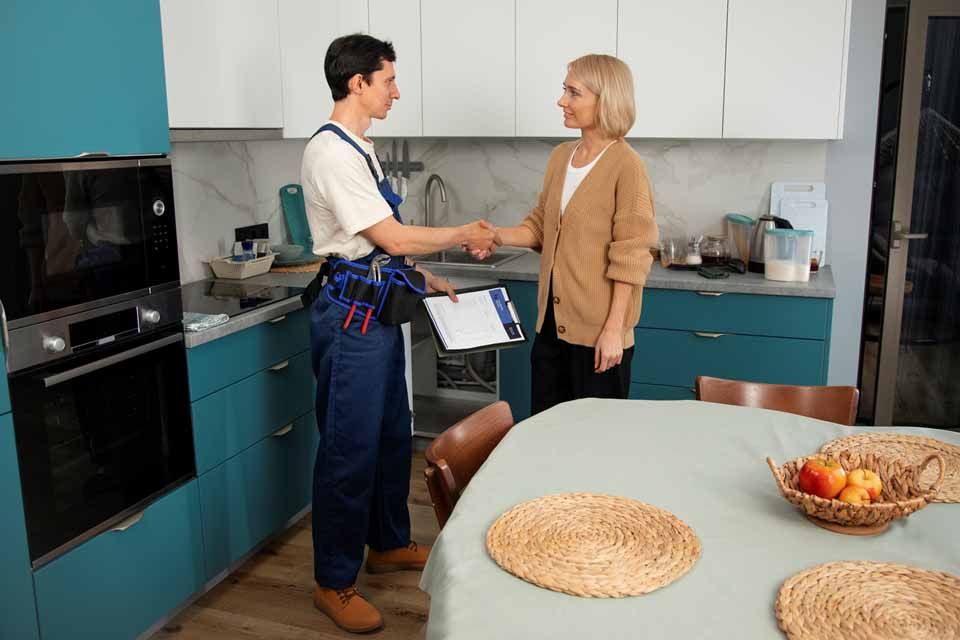
If you’re a plumber in a competitive city, you already know the uncomfortable truth: you can be the best technician on the block and still lose calls to a company that simply shows up first.
Today, “local SEO for plumbers” isn’t a single tactic. It’s a system that blends Google Business Profile performance, proximity signals, review momentum, on-site relevance, and brand trust, then ties all of it to what customers actually do: search “water heater leaking near me,” tap a Map Pack listing, and call the first business that looks credible.
At Divramis, our SEO for plumbers team has spent over a decade helping roofing companies, contractors, and local home-service businesses climb Google’s rankings with white-hat strategies, transparent reporting, and measurable lead growth.
The good news is that ranking in the Map Pack (and the organic results right under it) is far less mysterious than most agencies make it sound. The bad news is that the old shortcuts are fading. Keyword-stuffed business names, fake locations, spammy citations, and bought links are more likely to tank your visibility than boost it.
What’s winning right now is boring, in the best way: tight service/category alignment, strong on-page signals, reviews that read like real experiences, clean NAP data, fast mobile UX, and locally relevant backlinks. And because Google’s local results increasingly behave like a “trust contest,” the brands that communicate legitimacy (licenses, guarantees, clear pricing ranges, real photos, real locations, real community presence) tend to rise.
In this playbook, we’ll lay out the exact approach we use at Divramis when we want to help service businesses push into the top 3, without gambling on gray-hat tricks. We’ll cover the setups, page structures, keyword research, review systems, and measurement framework that make rankings predictable.
If we execute the steps below with consistency, we don’t just “rank.” We build a local acquisition engine that keeps producing calls even when competitors change names, run ads, or churn agencies.
Let’s get into it.
How Plumber Local SEO Works Today (And What Actually Moves Rankings)
Local SEO today is still anchored to the same three pillars we’ve talked about for years, relevance, distance, and prominence, but what’s changed is how Google measures each pillar and how quickly the results can shift when competitors improve their fundamentals.
Relevance: the “does this listing/page match the search?” layer
For plumbers, relevance is mostly about:
- Primary and secondary categories in your Google Business Profile (GBP)
- Service coverage (drain cleaning, water heater repair, sewer line, emergency plumbing, etc.)
- On-page content that makes it obvious what you do and where you do it
- Entity consistency (business name, services, brand mentions across the web)
A practical example: if we want to rank for “tankless water heater installation,” we rarely get there with a generic “Plumbing Services” page. We’ll usually need a dedicated service page (and often a GBP service set) that aligns with that intent.
Distance: the “where is the searcher relative to you?” layer
Distance still matters, a lot. But we can’t “SEO” our way out of being far away.
What we can do is:
- Make sure the address and pin are correct
- Build service-area relevance through location/service pages and local links
- Avoid fake addresses or virtual offices that trigger suspensions
In dense cities (Athens, Thessaloniki, London, Chicago), distance can create micro-markets. That’s why two plumbers can do everything “right,” yet one ranks better in a specific neighborhood.
Prominence: the “do people trust this business?” layer
This is where the biggest gains often come from. Prominence signals include:
- Review volume, velocity, and sentiment (plus keyword/context in the text)
- Local links and brand mentions (sponsors, suppliers, local news)
- Behavioral signals (clicks, calls, driving direction requests)
- Photo freshness and real-world activity in GBP
And here’s the reality: plumbing is a high-stakes service. Google wants to rank businesses that appear legitimate and safe. Trust signals, licenses, insurance, real photos, real reviews, clear policies, pull double duty: they help rankings and conversions.
What actually moves the needle fastest?
In competitive markets, the quickest “clean wins” are usually:
- GBP category + service alignment (often misconfigured)
- A review system that reliably generates fresh, detailed reviews
- Better landing pages for high-value services (water heaters, sewer, emergency)
- Locally relevant links/mentions (not random directory spam)
The rest matters, but those four are where we tend to see measurable movement first.
Set Up Your Google Business Profile To Rank And Convert (Not Just “Exist”)
Most plumbing GBPs are “filled out.” Very few are engineered.
A ranking-ready Google Business Profile should do two things at once: (1) send the right relevance signals to Google, and (2) make a stressed homeowner think, “Yes, these are the people.”
Get the fundamentals right (the boring stuff that prevents pain)
- Business name: use your real-world name. Don’t add keywords (“24/7 Emergency Plumber”) unless it’s your legal branding. This is one of the easiest ways to invite edits or suspensions.
- Address: if you serve customers at their location and don’t have signage or staff at your address, consider whether you should hide it and set a service area. If you do have a real office/yard, keep it visible and consistent.
- Phone number: use a number you control long-term. Avoid rotating tracking numbers as your primary unless you know how to carry out safely.
- Hours: include regular hours and emergency availability (if you offer it). Inconsistent “Open 24 hours” claims hurt trust.
Categories: where most plumbers lose rankings
Your primary category is the single strongest relevance choice in GBP. For many plumbers it should be “Plumber,” but depending on your model you might test:
- Plumber (primary for general)
- Drainage service (if drain work dominates)
- Water heater installation service (if that’s a core revenue driver)
Then add secondary categories only when you truly provide those services.
Services: build a service menu that matches how people search
GBP’s Services section isn’t just decoration. We map services to high-intent queries:
- Emergency plumbing
- Drain cleaning / clogged drain
- Sewer line repair / replacement
- Water heater repair / installation
- Leak detection
- Toilet repair / installation
If we’re in Greece or serving international markets, we also make sure wording matches local phrasing (e.g., “boiler” vs “water heater,” “unblocking” vs “drain cleaning”).
Photos and proof: conversion fuel that also supports prominence
Today, photo freshness is a quiet advantage. We want:
- Team photos (real people, branded uniforms)
- Job-site photos (before/after, clean and professional)
- Vehicle photos (branding matters)
- Office/warehouse exterior if applicable
And we upload consistently, not a one-time batch.
GBP Posts and FAQs: useful, not spammy
Posts can support seasonal intent:
- “What to do if your water heater is leaking”
- “Sewer smell in bathroom? 3 likely causes”
For Q&A, we prefer adding a few owner-asked, owner-answered questions that remove friction:
- “Do you offer same-day service?”
- “Are you licensed and insured?”
- “Do you provide estimates?”
The “conversion layer” checklist
Before we push traffic to GBP, we confirm:
- Website link goes to the right page (often a location page, not the homepage)
- Appointment/quote URLs work on mobile
- Messaging is enabled only if you can respond fast
- Attributes match reality (emergency service, online estimates, etc.)
A GBP that ranks but doesn’t convert is just expensive visibility. We want both.
Read more: How to make responsive websites SEO friendly
Build Location And Service Pages That Capture “Near Me” And Emergency Intent
If GBP is your storefront in Maps, your website is your proof file.
In competitive areas, we usually need more than a homepage and a generic “Services” page. We need a page structure that captures:
- “near me” intent (local relevance)
- emergency intent (speed + trust)
- high-margin services (water heaters, sewer, repipes)
The core structure we rely on
For most plumbing companies, a clean architecture looks like:
- /services/ (overview)
- /services/drain-cleaning/
- /services/water-heater-repair/
- /services/tankless-water-heater-installation/
- /services/sewer-line-repair/
- /services/emergency-plumber/
- /locations/ (overview)
- /locations/city-name/
- /locations/city-name/neighborhood/
Not everyone needs neighborhood pages. But in big cities, they can work well, if they’re built with real differentiation.
What makes a location page “real” (and not doorway spam)
Doorway pages are thin pages that exist only to rank. Google is getting better at filtering them.
A strong plumbing location page includes:
- Specific areas served (neighborhoods, suburbs)
- Local proof: testimonials from that area, local projects, photos
- “How fast can we get there?” expectations
- Parking/building nuances (apartments vs houses, older pipes, etc.)
If we can’t add real-world detail, we don’t publish the page.
Service pages: write for the moment the customer is in
Emergency intent is emotional. People want certainty.
On service pages, we aim to answer:
- What is the problem and what are the risks?
- What does the fix typically involve?
- What might it cost (at least a range)?
- How fast can you respond?
- Why should someone trust you in their home?
For example, an “Emergency Plumber” page that simply lists services is weak. A better one includes a short “If this is happening, shut off your water here…” section, practical help that builds trust.
Internal linking that pushes authority to money pages
We link intentionally:
- From blog posts (“Why your water heater leaks”) → to water heater service page
- From location pages → to the most requested services in that area
- From service pages → to the relevant location page (and vice versa)
This helps both users and Google understand your core offerings.
One detail most competitors miss: matching the landing page to the GBP click
If your GBP is ranking for “drain cleaning,” don’t send clicks to the homepage. Send them to /services/drain-cleaning/ with a strong above-the-fold call button.
It sounds small. It isn’t. In our experience, it’s one of the easiest ways to increase call volume without “more traffic.”
Nail Local Keyword Research For Plumbers: Services, Cities, And High-Value Modifiers
Plumbing keyword research is less about chasing huge volume and more about capturing urgent, valuable, and local intent.
When we do local SEO for plumbers, we build keyword sets in three layers.
Layer 1: core services (your revenue map)
Start with what you actually want to sell:
- Emergency plumber
- Drain cleaning
- Sewer line repair
- Water heater repair/installation
- Leak detection
- Pipe repair / repiping
- Toilet installation/repair
Then break out variations (tankless vs traditional, gas vs electric, hydro-jetting vs snaking).
Layer 2: geo intent (how customers define “local”)
People search using:
- City names (“plumber Chicago”)
- Neighborhoods (“plumber in Pagrati”)
- Suburbs (“plumber in Marousi”)
- “Near me”
We map these to your realistic service radius. Ranking everywhere is not the goal: ranking where you can respond quickly and profitably is.
Layer 3: high-value modifiers (the money words)
These modifiers often signal urgency and buyer intent:
- “emergency,” “24/7,” “same day”
- “licensed,” “insured,” “certified”
- “cost,” “price,” “estimate”
- “repair,” “replacement,” “installation”
- “leaking,” “burst,” “clogged,” “backed up”
A quick insight: “cost” keywords don’t always convert to calls immediately, but they create trust early. If we publish pricing guidance (with ranges and assumptions), we often see better conversions on high-intent pages later.
Tools + real-world validation
We can use keyword tools (Ahrefs, Semrush, Google Keyword Planner), but for plumbers we also mine:
- GBP Insights → “queries used to find your business”
- Google Search Console → actual search terms driving clicks
- Call logs → how customers describe the issue
- Competitor Map Pack categories and service menus
Build a priority list (not a keyword dump)
We typically score keywords by:
- Commercial value (average ticket + margin)
- Urgency (emergency vs informational)
- Competition (Map Pack density, strong brands)
- Fit (do you truly offer it, with proof?)
That produces a clear roadmap: which pages to build first, which to optimize next, and which terms to target with blogs vs service pages.
If we had to pick the top “first wave” for most plumbing businesses: emergency plumber, drain cleaning, water heater repair/installation, and sewer line repair.
On-Page SEO For Plumbing Sites: Trust Signals, Pricing Clarity, And Conversion Basics
On-page SEO for plumbers is where rankings and revenue meet. We’re not just writing for Google, we’re designing pages that a homeowner will trust in under 10 seconds.
Read more: The must-have features every professional website should have
Above the fold: answer the three silent questions
When someone lands on a plumbing page, they instantly ask:
- Can you fix my problem?
- Can I trust you in my home?
- What happens if I call?
So we put, near the top:
- The exact service + location (“Drain Cleaning in Austin”)
- One-sentence value proposition (fast response, upfront estimates)
- Click-to-call button (sticky on mobile)
- Trust badges that are real (license #, insurance, warranty)
Pricing clarity: not full transparency, but honest guidance
Many plumbers avoid pricing content because “it depends.” True. But vague pages convert worse.
We recommend:
- “Typical range” pricing with what impacts cost (access, parts, severity)
- Trip/diagnostic fee policy (if applicable)
- Financing options (only if real)
This doesn’t lock you> it pre-qualifies and reduces sticker shock.
Content that converts without fluff
We aim for:
- Clear service description (what you do)
- Common causes + symptoms (what they’re experiencing)
- Your process (how you diagnose, estimate, fix)
- FAQs (warranty, timing, parts)
We avoid long blocks of generic copy. If every competitor can say it, it’s not helping you.
E-E-A-T for local services (how we “show our work”)
Trust is everything in plumbing. We add:
- Technician bios or team page (even short)
- License and insurance statements
- Photos of real jobs and team
- Case studies (“Sewer line replacement in Nea Smyrni: 1-day trenchless repair”)
If you serve Greece and international audiences, bilingual elements can help, but only if you can support customers in that language.
On-page SEO essentials (still important)
- Title tags that match intent (“Emergency Plumber in [City] | Same-Day Service”)
- Clean H1/H2 structure
- Internal links to related services
- Optimized images (alt text, compression)
A plumbing site doesn’t need to be fancy. It needs to be fast, clear, and believable. That combination is underrated, and it wins.
Reviews That Rank: A System For Volume, Velocity, And Trust (Without Violations)
Reviews are one of the strongest prominence signals in local SEO for plumbers, and one of the strongest conversion levers.
But we need a system that’s consistent and policy-safe.
What “reviews that rank” really means
It’s not just star rating. Google is looking at patterns:
- Volume: do you have enough reviews compared to peers?
- Velocity: are new reviews coming in regularly?
- Diversity: different reviewers, different times, different wording
- Detail: mentions of services, neighborhoods, and outcomes
- Owner responses: do you respond like a real business?
A company with 4.7 stars and 300 reviews often beats a company with 5.0 stars and 18 reviews.
The simplest system that actually works
We recommend a three-step flow:
- Ask at the right moment: right after the job is complete and the customer is relieved.
- Use a direct review link: send a short SMS with the Google review link.
- Follow up once: one reminder 24–48 hours later if they haven’t left it.
Consistency beats creativity.
What to say (and what not to say)
We do not incentivize reviews (discounts, gifts, contests). That’s risky and often violates platform rules.
We do guide customers on what’s helpful, without scripting. Example:
“If you can, mention the service we helped with (like water heater repair) and the area we came to. It helps other homeowners find us.”
Responding to reviews like a human (and a brand)
Owner responses can influence trust and sometimes even keyword context.
We respond with:
- A thank you
- The service mentioned (without overstuffing)
- A small human detail (“Glad we could stop that leak quickly”)
For negative reviews:
- Stay calm
- Ask to take it offline
- Clarify facts without attacking
A thoughtful response is often more persuasive than the original complaint.
Review triage: which jobs should trigger a request?
Ideally, most jobs. But if you want a fast lift, prioritize:
- High-value services (sewer, water heaters)
- Emergency saves (burst pipes)
- Customers in neighborhoods you want to rank in
That naturally builds relevance around your best keywords and service areas, without gaming anything.
Local Citations And NAP Consistency: What Matters Now And What To Ignore
Citations used to be the “secret weapon.” Today, they’re more like plumbing: you only notice them when something leaks.
What still matters
NAP consistency (Name, Address, Phone) matters because it reduces confusion for Google and customers.
Read more: How to rank first in ChatGPT SEO with proven AI visibility strategies
We focus on:
- Major data aggregators and core directories (varies by country)
- Industry-relevant platforms (trade associations, local chambers)
- Your top local listings that actually get traffic
The goal is not 500 listings. The goal is clean, consistent identity.
What to ignore (most of the time)
- Low-quality directory packages (“We’ll submit you to 300 sites.”)
- Spammy citation networks with no real users
- Exact-match anchor text stuffing in directory descriptions
In competitive cities, citation spam rarely moves you up. It can, but, create a mess when your phone number changes or when duplicates appear.
The citation cleanup that often unlocks growth
If rankings are stuck, we often find:
- Duplicate GBP listings
- Old addresses still published
- Different phone numbers across directories
- Slight naming variations (“ABC Plumbing LTD” vs “ABC Plumbing”)
Cleaning these up doesn’t always create a dramatic ranking jump on its own, but it stabilizes everything else (reviews, links, GBP trust). And stability is a ranking advantage.
A practical baseline checklist
- One canonical NAP format on your website (footer + contact page)
- Same NAP on GBP
- Same NAP on your top 20 citations
- Remove or merge duplicates
If we do citations, we do them like infrastructure: correct, minimal, maintainable.
Local Links For Plumbers: Sponsorships, Suppliers, PR, And Neighborhood Relevance
Local links are one of the clearest “prominence” signals we can build without playing games.
And for plumbers, link building doesn’t need to be complicated. It needs to be local, relevant, and real.
Sponsorships that make sense (and can earn links)
Neighborhood relevance matters. We look for:
- Youth sports teams
- Local charity events
- School fundraisers
- Community festivals
If the sponsor page includes your logo and a link, great. If it doesn’t, the brand mention still helps.
Supplier and partner links (often overlooked)
Plumbers have a natural network:
- Plumbing supply houses
- Manufacturer partner directories
- Water heater brands (certified installer pages)
- General contractors you work with
We ask for inclusion where it’s legitimate. These links are typically clean and durable.
Local PR: small stories, big trust
You don’t need national press. You need local credibility.
Ideas that actually get picked up:
- “Free leak inspections for seniors week” (if you can support it)
- “How to prevent frozen pipes” seasonal tips for local news sites
- A safety campaign around gas water heaters
A single local news mention can outweigh dozens of low-quality links.
Neighborhood pages + link bait (done tastefully)
If we publish resources that are genuinely useful, we can attract links naturally:
- “Homeowner’s emergency shutoff guide for [City]”
- “Apartment plumbing checklist (older buildings)”
- “What to do during a water main break”
These aren’t “SEO articles.” They’re helpful pages that local blogs, HOAs, or property managers might reference.
A realistic link goal
For many plumbers, 2–6 quality local links per month is enough to separate from the pack over time.
It’s slower than buying links. It’s also far safer, and it compounds.
Technical SEO Essentials: Speed, Crawlability, And Mobile UX For Service Businesses
Technical SEO for plumbers isn’t about fancy stacks. It’s about removing friction, both for Google and for panicked customers on phones.
Speed: the easiest competitive edge
Most plumbing websites are heavy, theme-bloated, and slow.
We aim for:
- Fast mobile load (Core Web Vitals improvements where feasible)
- Compressed images (especially before/after galleries)
- Minimal plugin overload (WordPress sites are notorious here)
- Lazy loading for non-critical media
Even a 1–2 second improvement can noticeably lift call conversions.
Crawlability: make it easy for Google to understand your site
Common issues we fix:
- Noindex accidentally enabled
- Broken internal links to service pages
- Thin duplicate pages (multiple “service area” pages with the same text)
- Incorrect canonicals
- XML sitemap missing important pages
Mobile UX: design for thumbs and urgency
Plumbing is a mobile-first category.
We prioritize:
Read more: Redesigning a website without losing its SEO rankings
- Sticky call button (not intrusive popups)
- Clickable phone number in header
- Short forms (name, phone, issue, location)
- Clear service area and hours
If your mobile experience is annoying, users bounce back to Maps and pick the next listing. That bounce behavior is not what we want.
Security and trust basics
- HTTPS everywhere
- No sketchy redirects
- Clean hosting (uptime matters)
A surprising number of local sites still have mixed content warnings or outdated plugins. Those issues quietly erode trust.
The goal is simple: a website that loads fast, is easy to navigate on mobile, and makes Google confident that your most important pages are accessible and unique.
Schema For Plumbers: LocalBusiness, Service, Review, And FAQ Markup Done Right
Schema won’t magically rank you first, but it can reduce ambiguity and improve how your pages appear in search.
For plumber local SEO, we typically carry out four schema types thoughtfully.
LocalBusiness (or PlumbingBusiness) schema
We mark up:
- Business name
- Address (or service area where appropriate)
- Phone
- Opening hours
- URL
- SameAs (social profiles)
This helps reinforce your NAP consistency.
Service schema for core offerings
On each major service page, we can add Service markup describing:
- The service name (e.g., Drain Cleaning)
- Area served
- Provider (your LocalBusiness)
We keep it accurate and avoid stuffing every city name into schema.
Review schema: be careful
This is where many sites get it wrong.
Important notes:
- Don’t mark up reviews you don’t control or can’t display on-page.
- Avoid “aggregateRating” spam if you’re not showing genuine rating summaries.
- Don’t copy your Google reviews into markup in ways that violate guidelines.
If you have on-site testimonials (from real customers, with permission), we can mark those up responsibly.
FAQ schema for service pages
FAQs are a practical win because plumbing questions are repetitive:
- “Do you offer emergency service at night?”
- “Do you charge a call-out fee?”
- “How long does drain cleaning take?”
We write short, direct answers and keep them aligned with what’s visible on the page.
The real benefit: cleaner interpretation
Schema is less about “rich results” and more about giving Google clean signals.
In competitive cities, where many businesses look similar, removing ambiguity can help your relevance, and support better indexing of your service and location pages.
Measure What’s Working: Map Pack Tracking, Calls, Forms, And Revenue Attribution
If we can’t measure it, we can’t scale it. And in local SEO, measurement is where most plumbing businesses fly blind.
Track Map Pack visibility like a professional
Rank tracking for local is tricky because results vary by location.
We recommend:
- Grid-based local rank tracking (by neighborhood)
- Tracking for your top services (not just “plumber”)
- Monitoring both Maps and organic results
This tells us where we’re winning and where proximity is holding us back.
GBP reporting that actually matters
Inside GBP, we watch:
- Calls
- Direction requests
- Website clicks
- Message clicks (if enabled)
- Photo views vs competitors
Trends matter more than single weeks.
Call tracking without breaking your NAP
We like call tracking, but we carry out it carefully:
- Use dynamic number insertion (DNI) on the website
- Keep your primary GBP number consistent
- Attribute calls by source (GBP vs organic vs paid)
If we can’t track cleanly, we at least track outcomes via CRM or call logs.
Forms, chats, and lead quality
We tag every form submission with:
- Service requested
- Location
- Device
- Landing page
A plumber doesn’t need “more leads.” We need more good leads.
Read more: How to retain organic traffic for the long term
Revenue attribution (the part most people skip)
At minimum, we want to know:
- Which service pages generate booked jobs
- Average job value by channel
- Close rate differences between GBP calls vs website forms
When we have that, we can make smarter decisions:
- Double down on sewer pages if they drive high-ticket jobs
- Improve emergency page conversion if it generates lots of low-quality calls
At Divramis, this is where we often unlock the “up to 1200%” growth effects, not through magic, but through ruthless iteration based on what prints revenue.
Common Local SEO Mistakes Plumbers Make (And Quick Fixes)
We see the same issues across plumbing sites in the US, Greece, and pretty much everywhere else. The fixes are usually straightforward.
Mistake 1: Sending GBP traffic to the homepage
Fix: Link GBP to the most relevant service/location landing page.
Mistake 2: Category mismatch in GBP
Fix: Set the correct primary category and remove irrelevant secondary categories.
Mistake 3: Thin “service area” pages that are basically clones
Fix: Consolidate weak pages, build fewer but stronger location pages with real local details.
Mistake 4: No review system (only occasional asks)
Fix: Carry out SMS request + one follow-up, train techs to ask at job completion.
Mistake 5: Stock photos and no proof
Fix: Upload real job photos weekly: add team/vehicle shots.
Mistake 6: Slow mobile site and annoying popups
Fix: Improve speed, simplify the theme, remove intrusive interstitials.
Mistake 7: Ignoring “money services” on the site
Some plumbers have pages for everything except their highest-margin services.
Fix: Build dedicated pages for water heaters, sewer line repair, repipes, and emergency service, then interlink them.
Mistake 8: Chasing spammy shortcuts
Keyword stuffing the business name, fake addresses, paid review schemes, these can work briefly, then collapse.
Fix: Build a durable system: legitimate GBP, real reviews, strong pages, real local links.
If we correct just the top 3–4 mistakes above, we usually see movement within a few weeks to a few months, depending on competition.
Conclusion
Winning local SEO for plumbers today isn’t about finding a loophole. It’s about building a local brand Google can confidently recommend, then making it ridiculously easy for customers to call.
If we had to prioritize, we’d start with a GBP that’s properly categorized and built to convert, then publish a small set of high-intent service pages (especially emergency, drains, water heaters, sewer). Next, we’d put reviews on a reliable cadence, clean up NAP inconsistencies, and earn a steady stream of locally relevant links.
After that, the “unsexy” work, speed, mobile UX, schema, internal linking, tracking, becomes the difference between a short-term ranking spike and a durable position in the Map Pack.
If you want us to pressure-test your current setup, we can usually spot the biggest ranking bottlenecks quickly: mismatched categories, weak landing pages, missing trust signals, or a review profile that’s stalled. Fix those, and competitive cities start to feel a lot less impossible.
The Map Pack is crowded. But it’s not random. With the right system, we can earn our place there, and keep it.
Key Takeaways
- Effective local SEO for plumbers today requires a system combining a well-optimized Google Business Profile with strong on-site relevance, fresh reviews, and local backlinks.
- A properly configured Google Business Profile with accurate categories, up-to-date photos, and clear service listings greatly improves both ranking and customer trust for plumbers.
- Building dedicated service and location pages that match specific customer intents like “emergency plumbing” or “water heater repair near me” increases both visibility and conversion rates.
- Consistently generating genuine, detailed reviews following a structured system boosts prominence, ranking, and conversion for plumbing businesses.
- Maintaining NAP consistency across key directories and focusing on quality local links from sponsorships and partnerships enhances authority and local SEO performance.
- Fast mobile site speed, clear trust signals, and accurate schema markup improve user experience and help plumbers rank higher in competitive local markets.
Local SEO for Plumbers: Frequently Asked Questions
What are the key factors that influence local SEO rankings for plumbers today?
Local SEO for plumbers relies on relevance (accurate categories and service alignment), distance (proximity to searchers with correct address and service areas), and prominence (review volume, quality backlinks, and trust signals like licenses and real photos).
How can plumbers optimize their Google Business Profile (GBP) to improve local search visibility?
Plumbers should use their real business name, select correct primary and secondary categories, maintain accurate contact info and hours, add detailed service menus, upload fresh photos regularly, and respond to reviews to boost GBP relevance and trustworthiness.
Why is having dedicated service and location pages important for plumber local SEO?
Dedicated service and location pages target specific high-intent keywords and local areas, improving relevance and ranking. They also match GBP clicks better, increasing conversions by addressing urgent needs like emergency plumbing or water heater repair in the customer’s neighborhood.
What role do customer reviews play in local SEO for plumbing businesses?
Reviews impact prominence by signaling trust and service quality. Consistent, fresh, and detailed reviews mentioning services and locations improve rankings and conversions. A well-managed review system with thoughtful owner responses strengthens credibility without risking policy violations.
How can plumbers conduct effective local keyword research for SEO?
Effective local keyword research involves identifying core services, incorporating geo-specific terms (cities, neighborhoods, ‘near me’), and adding high-value modifiers like ’emergency,’ ‘licensed,’ or ‘cost’ to capture urgent and commercial intent relevant to their service area.
What are common local SEO mistakes plumbers make and how can they fix them?
Common mistakes include linking GBP to the homepage instead of relevant service pages, misconfigured categories, thin or duplicate location pages, inconsistent review systems, or ignoring key services. Fixing these by aligning categories, building quality pages, and establishing review processes can improve rankings significantly.
Read More
Discover more from ID AGORA:
You may also like
-
1 Μήνας SEO Δωρεάν! Με την αγορά τρίμηνου πακέτου SEO!
-
SEO Case Study: Νέο site από 0 σε 100.000 επισκέψεις σε έναν μήνα
-
Mystras Travel Guide: The Byzantine Castle Town of the Peloponnese
-
Topic Clusters and Pillar Pages: Organizing Content for Authority
-
The Map Pack Playbook: Turning a Google Business Profile Into a Lead Engine